
The client believed the market had stopped, the product felt expensive and advertising required time he did not have. Instead of promising instant cold-traffic performance, we returned to an asset he already owned: consented customer data and an offer we could rebuild.
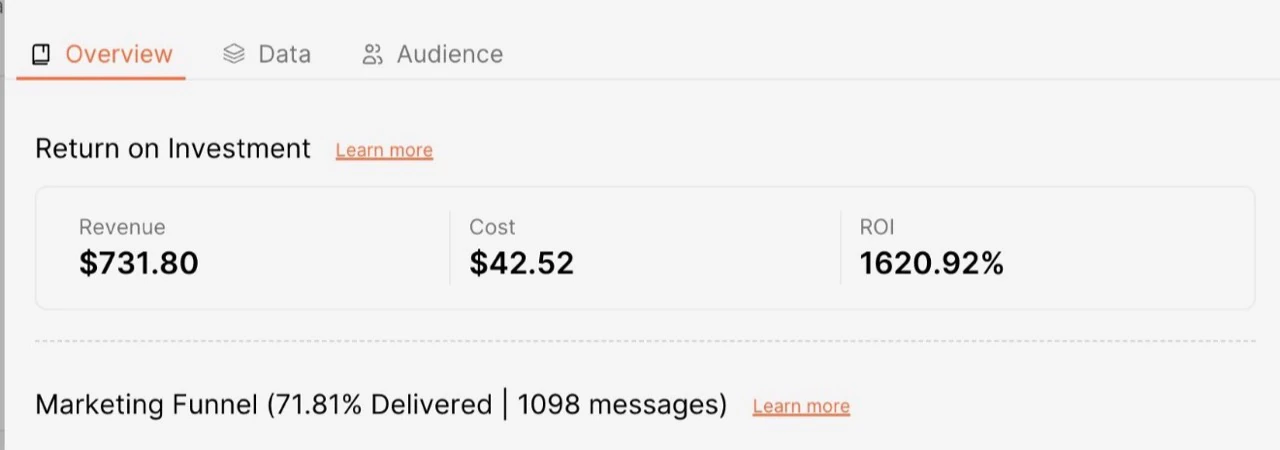
The image verifies this batch only. First-day and full-campaign totals come from project data supplied by Ahmed.
The requirement was cash, not reach
The client did not need a beautiful campaign; he needed liquidity against an obligation. That changes channel selection. Cold traffic requires time to learn and trust, while existing customers already know the product.
WhatsApp was not chosen because it is magical. It was the channel closest to the commercial objective and time constraint.
We changed the offer before sending
The original offer was not strong enough to reactivate someone who had not purchased. We rebuilt value, message and timing, then wrote a direct path from reason to benefit to action.
A direct channel with a weak offer simply creates annoyance faster. Offer repair came first.
Roughly 1,000 contacts per batch—not 10,000 at once
A list above 10,000 contacts was segmented into daily batches of roughly 1,000 to protect a new WhatsApp API line, monitor delivery and measure response before expansion.
The attached batch records 1,098 messages and a visible delivery rate of 71.81%.
What the evidence proves—and what it does not
The image verifies $731.80 revenue, $42.52 cost and 1620.92% ROI for one batch. Project data reports more than $1,700 on day one and over $5,000 across ten days at a cost below $250.
That result cannot be projected onto every list or product. Data quality, consent, offer, timing and response capacity all matter.
Conclusion
A slowdown does not always mean demand disappeared. It may mean the old channel, message and offer stopped moving the customer. But channels do not win alone; execution creates their economics.